
Copper Oxide Particle Size: Micron Powder vs Nano and What You Need
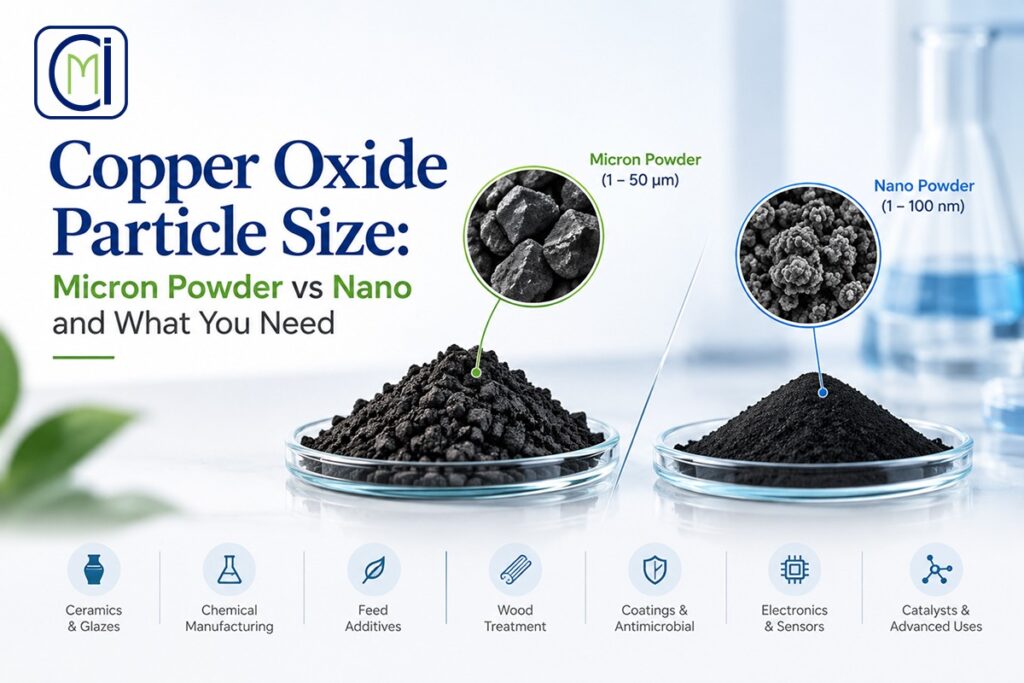
Copper oxide particle size controls how evenly the powder disperses, how fast it dissolves and how reactive it is. For most industrial uses, including ceramic colour, copper salts, feed and wood treatment, fine micron powder (about 1 to 50 µm) is usually the right choice. Nano grades (1 to 100 nm) earn their higher cost […]
Copper Oxide Uses: Ceramics, Glass, Catalysts, Feed and Electronics
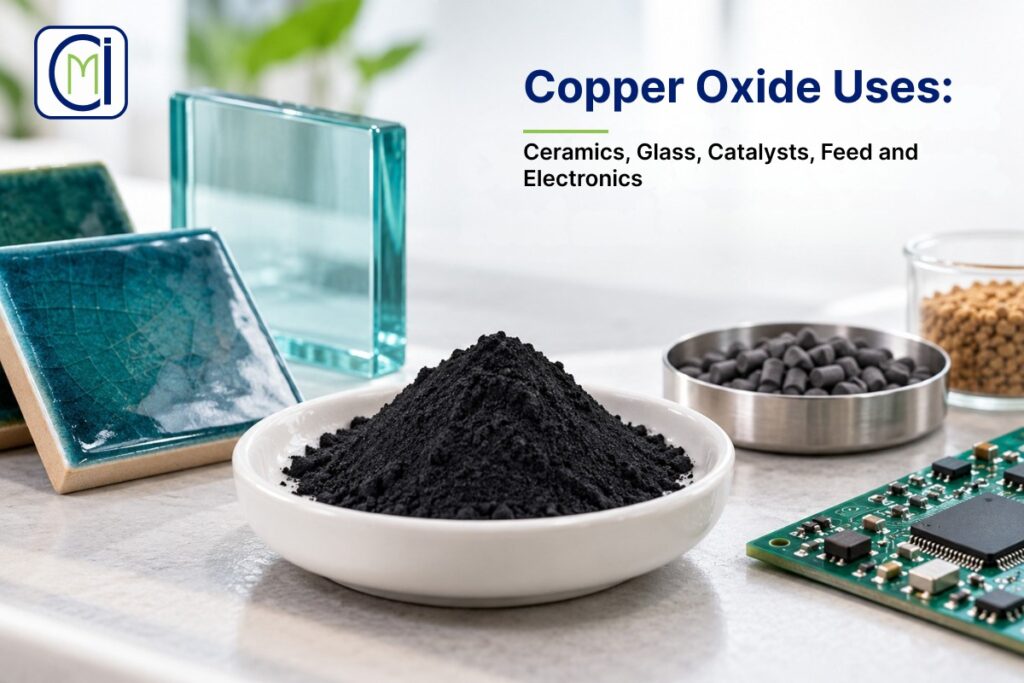
The main copper oxide uses are colouring ceramics and glass, catalysis, copper supplementation in feed and fertilizer, wood preservatives, making copper salts, and semiconductor and battery materials. Most of them rely on cupric oxide (CuO), a black, water-insoluble powder with about 80% copper. This guide covers each use, what to specify for it, and what […]
Copper Carbonate Uses: Ceramics, Feed, Wood Treatment and Chemicals
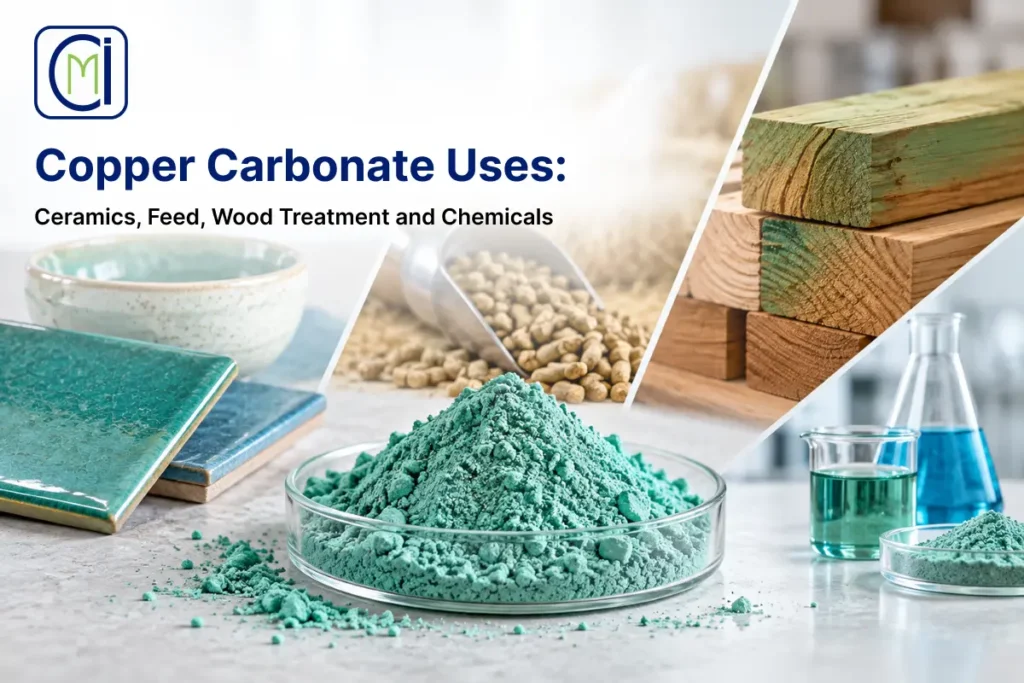
By Meghachem Technical Team · Last updated: November 4, 2026 basic copper carbonate manufacturer is used mainly as a blue and green colourant in ceramics and glass, a copper source in animal feed, an ingredient in wood preservatives, and a starting material for copper salts and catalysts. The material sold under this name is basic […]
Cuprous Chloride & Ammonium Molybdate in CuPc Pigments
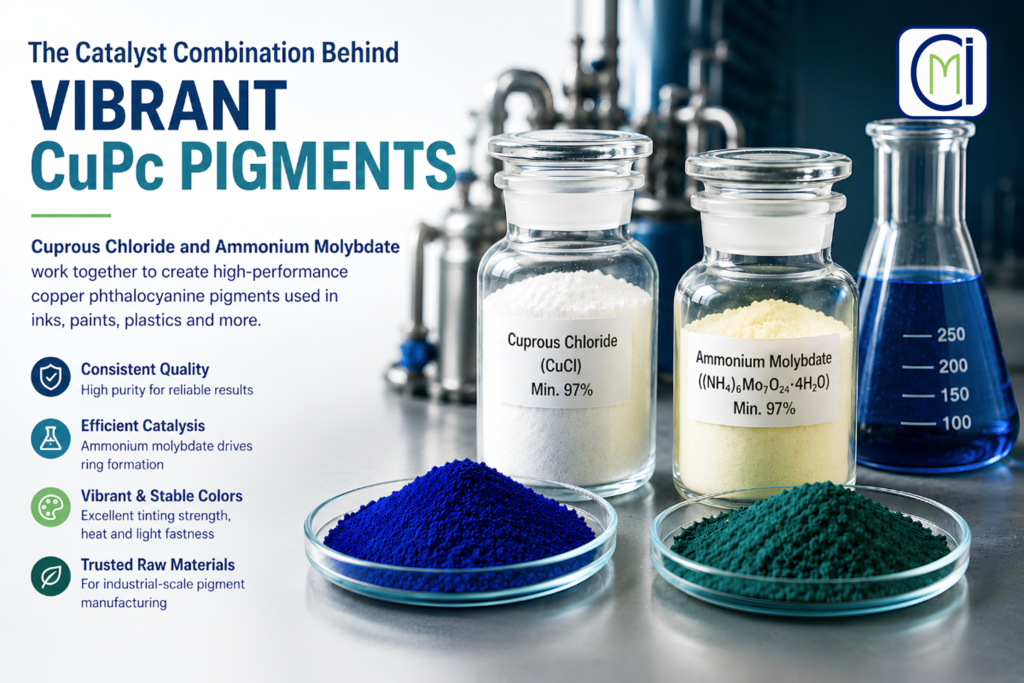
By Meghachem Technical Team · Last updated: November 4, 2026 Most copper phthalocyanine (CuPc) pigment is made by heating phthalic anhydride, urea, a copper source, and a small amount of catalyst together in a solvent. Cuprous chloride usually supplies the copper. Ammonium molybdate drives the reaction that closes the phthalocyanine ring. Together, they turn a […]