Most bad supplier relationships don’t look risky at the start. They look like a normal quote in an email, a professional-looking catalog, and a price that seems fair. The warning signs show up in the details: a document that’s slow to arrive, a bank account name that doesn’t quite match, an address nobody can verify.
Here are 10 concrete signs to check before you commit to a chemical supplier in India, not vague advice, but specific things you can actually verify before placing an order.
1. No SDS or CoA Without Being Asked
A legitimate manufacturer sends the Safety Data Sheet and Certificate of Analysis with the quote, not after you request them a second or third time. If a supplier treats basic documentation as optional, assume the quality control behind it is just as loose.
2. GST Details That Don't Match
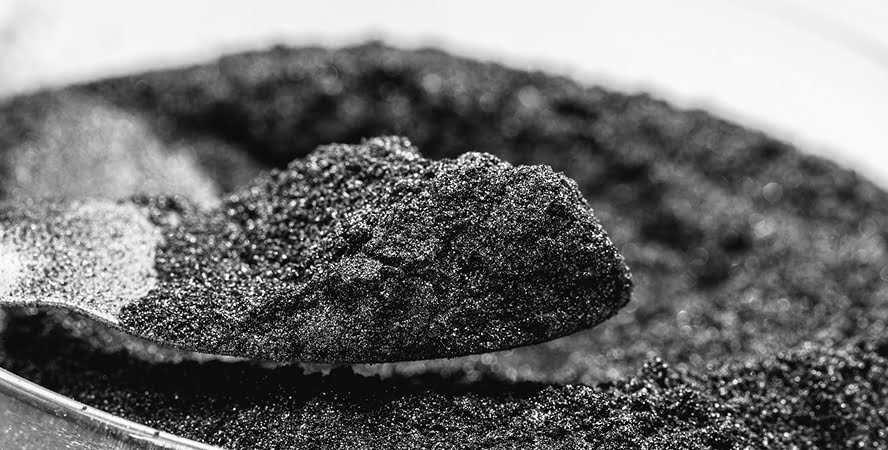
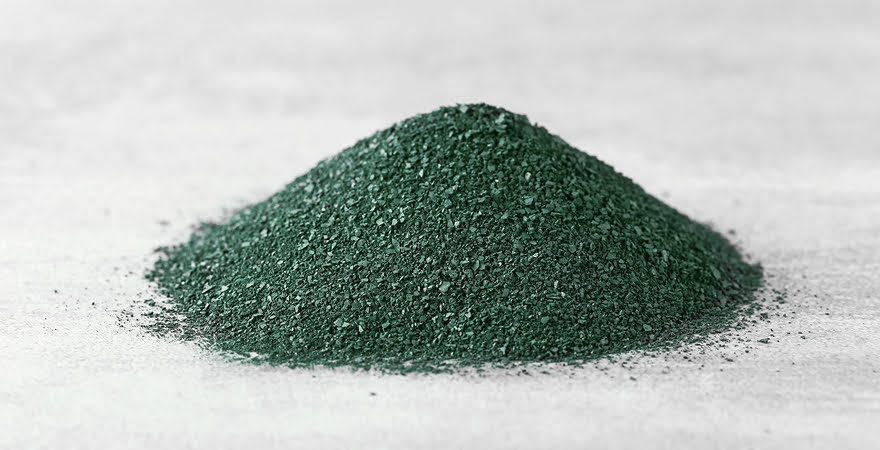
Industrial CuPc production still runs largely on what’s called the urea process, sometimes referred to as the Wyler method. Cuprous chloride, urea, and phthalic anhydride (or phthalimide) are combined in a high-boiling solvent, commonly trichlorobenzene or an alkylbenzene, along with a small measured amount of ammonium molybdate as catalyst.
The batch is heated to roughly 180 to 200°C and held there for several hours. Under that heat, the copper atom locks into the center of four linked phthalocyanine units, forming crude CuPc.
That crude material isn’t pigment-ready yet. It goes through a second step called conditioning, where it’s either dissolved in acid and reprecipitated or milled down to a much finer particle size. Skip this step, and the same chemical looks dull instead of vivid: particle size, not just the underlying chemistry, is what gives CuPc its tinting strength.
3. Pricing Well Below the Market Range
Chemical pricing tracks raw material cost, energy, and compliance overhead fairly closely across legitimate manufacturers. A quote noticeably under that range usually means diluted concentration, underfilled containers, or an unlicensed trader reselling material they didn’t produce.
4. Payment Requested to a Personal Account
A company invoice should be paid to a company bank account with a matching name. If the account holder’s name doesn’t match the GST legal name, or you’re suddenly asked to pay a different account because “the usual one is under audit,” stop the transaction.
5. No Corporate Email Domain
Professional exporters run their communication through a company domain, something like sales@companyname.com, not a free Gmail or Yahoo address. It’s a small detail, but it correlates strongly with everything else on this list.
Want a second opinion on a quote or a supplier's documentation before you commit?
Send it to our team for a quick check 👇
6. Can't Explain Where the Product Is Actually Made
Ask directly: which facility manufactures this, and can I see it. A real manufacturer answers immediately, with a location and process detail. A reseller posing as a manufacturer hesitates, deflects, or gives an answer that changes on a follow-up question.
7. Reluctant to Allow a Facility Visit or Audit
Even a virtual walkthrough is a reasonable request before a large order. A supplier who resists every version of this, in person, by video call, or through a third-party audit, is usually hiding something about scale, equipment, or ownership.
8. No Export Track Record or IEC Details
Any Indian company legally exporting goods holds an Import Export Code issued by the DGFT. A supplier who can’t produce this, or whose only export history is a single unverifiable shipment, hasn’t actually done this at scale before.
9. No Verifiable Factory Address
Cross-check the manufacturing address against the port of loading on past shipping documents, if they’re offered. A mismatch usually means an unrelated intermediary is involved somewhere in the chain, often without the buyer being told.
9. No Verifiable Factory Address
Cross-check the manufacturing address against the port of loading on past shipping documents, if they’re offered. A mismatch usually means an unrelated intermediary is involved somewhere in the chain, often without the buyer being told.
10. No References From Other Buyers
A supplier with a real track record can point to other companies who’ve bought from them, not just testimonials on their own website. If every reference is unverifiable, or the supplier is cagey about the request, that’s worth noticing.
None of these signs alone is automatically disqualifying, but two or three together are worth walking away from. Meghachem Industries has manufactured copper, tin, zinc, and molybdate chemicals from its own Gujarat facility for over 20 years, with a COA and MSDS on every shipment and a verifiable export history across 25+ countries. Request a quote or a facility reference →
FAQs
Whether they provide a Certificate of Analysis and Safety Data Sheet without being asked twice. It’s the fastest indicator of how seriously they treat quality and compliance overall.
Check it directly at the official GST portal, gst.gov.in. Confirm the GSTIN is active, the legal name matches the company, and the state matches their address.
Not always, but a price well below the prevailing market range for that chemical usually means diluted product, underfilled containers, or an unlicensed reseller, not just an efficient manufacturer.
An Import Export Code, issued by India’s Directorate General of Foreign Trade. Any company legally exporting from India holds one; a supplier who can’t produce it hasn’t cleared a basic legal requirement for export trade.
For any meaningful order volume, yes, in person or virtual. A supplier’s willingness to show their actual production facility says more than any brochure or sample certificate.