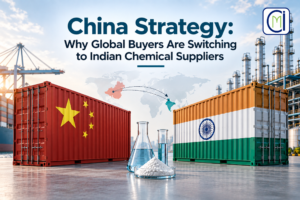
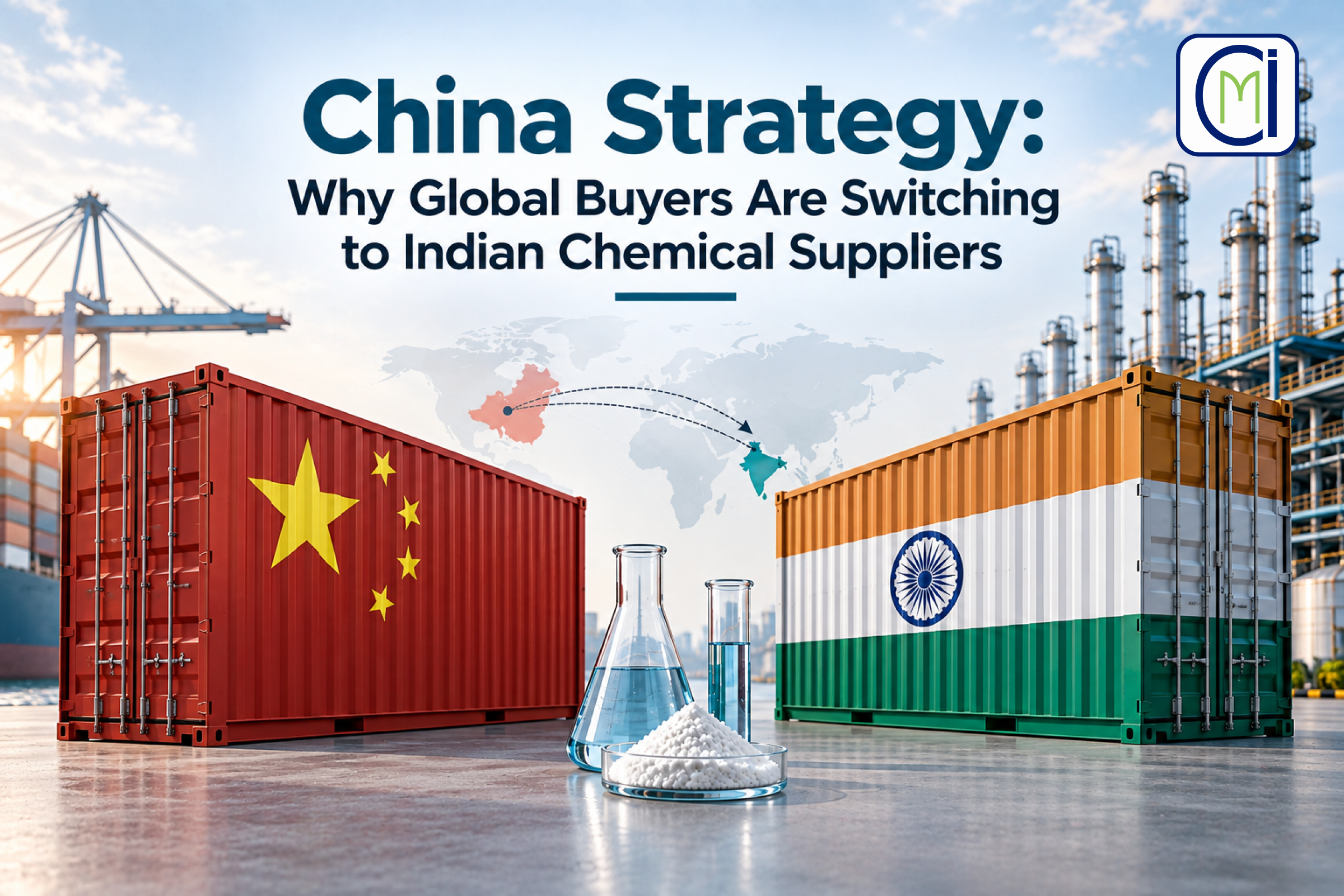
China+1 isn’t a future strategy anymore. It’s how most global manufacturers already buy raw materials: keep a Chinese supplier, and qualify at least one supplier outside China for the same input. Chemicals are very much part of that shift, and not just the specialty and pharmaceutical chemicals that usually get the headlines.
Buyers of industrial inputs, copper, tin, zinc, and molybdenum chemicals used in electroplating, pigments, and metal finishing, are running the same qualification process. Here’s what’s actually driving that shift toward India, and what to check before you make the switch yourself.
What Does "China+1" Actually Mean?
China+1 describes a sourcing policy, not a boycott: keep existing China-based suppliers where they work, and add at least one qualified supplier in another country for the same material. The goal is redundancy, not replacement. A single-country supply chain for any critical input is now treated as an operational risk in its own right, regardless of how competitive that supplier’s pricing is.
The forces behind it are familiar by now: rising manufacturing costs in China, tightening environmental permitting for chemical production there, repeated shipping and logistics disruptions, and a general push from procurement teams to never again be one factory shutdown away from a stalled production line.
Why India Is Absorbing a Large Share of This Shift
India’s chemical exports reached roughly $21 billion in FY25, and the specialty chemicals segment alone roughly doubled between 2020 and 2025. A production-linked incentive scheme for specialty chemicals, backed by an allocation of more than ₹12,000 crore, is concentrated in Gujarat, Maharashtra, and Andhra Pradesh, the states with the deepest existing chemical manufacturing base.
Gujarat in particular has decades of purpose-built chemical infrastructure: dedicated industrial estates, established effluent treatment infrastructure, and a supplier base that already treats export documentation, Certificates of Analysis, and compliance paperwork as standard practice rather than a special request.
Most coverage of this shift focuses on pharmaceutical ingredients and specialty or agrochemicals. Less discussed, but just as real, is the parallel move in industrial inorganic chemicals: the copper, tin, zinc, and molybdenum salts that feed electroplating lines, pigment manufacturing, and metal surface treatment across the same electronics, automotive, and consumer goods supply chains that are diversifying everything else.
What Buyers Actually Check Before Switching Suppliers
Price gets a supplier shortlisted. It doesn’t get them qualified. Procurement teams running a genuine China+1 evaluation are checking:
- Whether a Certificate of Analysis and Material Safety Data Sheet ship with every batch, not just on request
- Whether the manufacturer holds ISO certification and shows a consistent quality record across shipments, not just one good sample
- Whether export documentation and customs paperwork are handled directly by the manufacturer or passed through a trading intermediary
- Whether the supplier has an actual multi-country export track record, not just a domestic sales history
- Whether trial or sample-order quantities are available to qualify the product before committing to a full container
Evaluating an Indian supplier for copper, tin, zinc, or molybdenum chemicals?
Where an Established Gujarat Manufacturer Fits In
For buyers working through that checklist, an established manufacturer removes most of the qualification risk that comes with switching suppliers cold. Meghachem Industries has manufactured copper, tin, zinc, and molybdate chemicals from its GIDC Vatva, Ahmedabad facility for over 20 years, with an export track record across 25-plus countries and an ISO-certified quality system.
That history matters more than it might seem. A newly built factory chasing China+1 demand still has to prove batch-to-batch consistency; an established one already has years of shipment records, documented quality data, and repeat buyers to point to. In a China+1 decision, that track record often outweighs a marginally lower quote from an unproven supplier.
China+1 Doesn't Mean Leaving China Completely
Almost none of the procurement teams running this strategy are dropping their China suppliers outright. The standard approach is parallel sourcing: keep the existing Chinese supplier for volume and price, and qualify an Indian supplier as a second, audited source for the same material. That second source is what protects a production line when a single supplier has a quality issue, a shipping delay, or a sudden cost spike, without forcing a full re-qualification under pressure.
That’s also why the switch tends to be gradual. Buyers start with a trial order, verify consistency across two or three shipments, and only then move meaningful volume across.
Meghachem Industries supplies copper, tin, zinc, and molybdate chemicals to buyers across 25+ countries.
FAQs
It means adding at least one qualified supplier outside China for a material you currently source there, rather than replacing the existing supplier outright. The goal is supply chain redundancy, not a full switch.
India combines a large existing chemical manufacturing base, government incentive schemes for the sector, and established export infrastructure in states like Gujarat and Maharashtra, along with rapid growth in chemical export volumes over the last five years.
No. It applies to any input with single-source risk, including industrial inorganic chemicals like copper, tin, zinc, and molybdenum salts used in electroplating and pigment manufacturing, even though that segment gets less coverage than pharma APIs.
A Certificate of Analysis and MSDS with every shipment, ISO certification, a direct (not trader-routed) export documentation process, an established shipment history, and availability of trial or sample orders.
No. Most buyers run both in parallel: the existing supplier for ongoing volume, and a qualified second source for redundancy. Full replacement is the exception, not the rule.