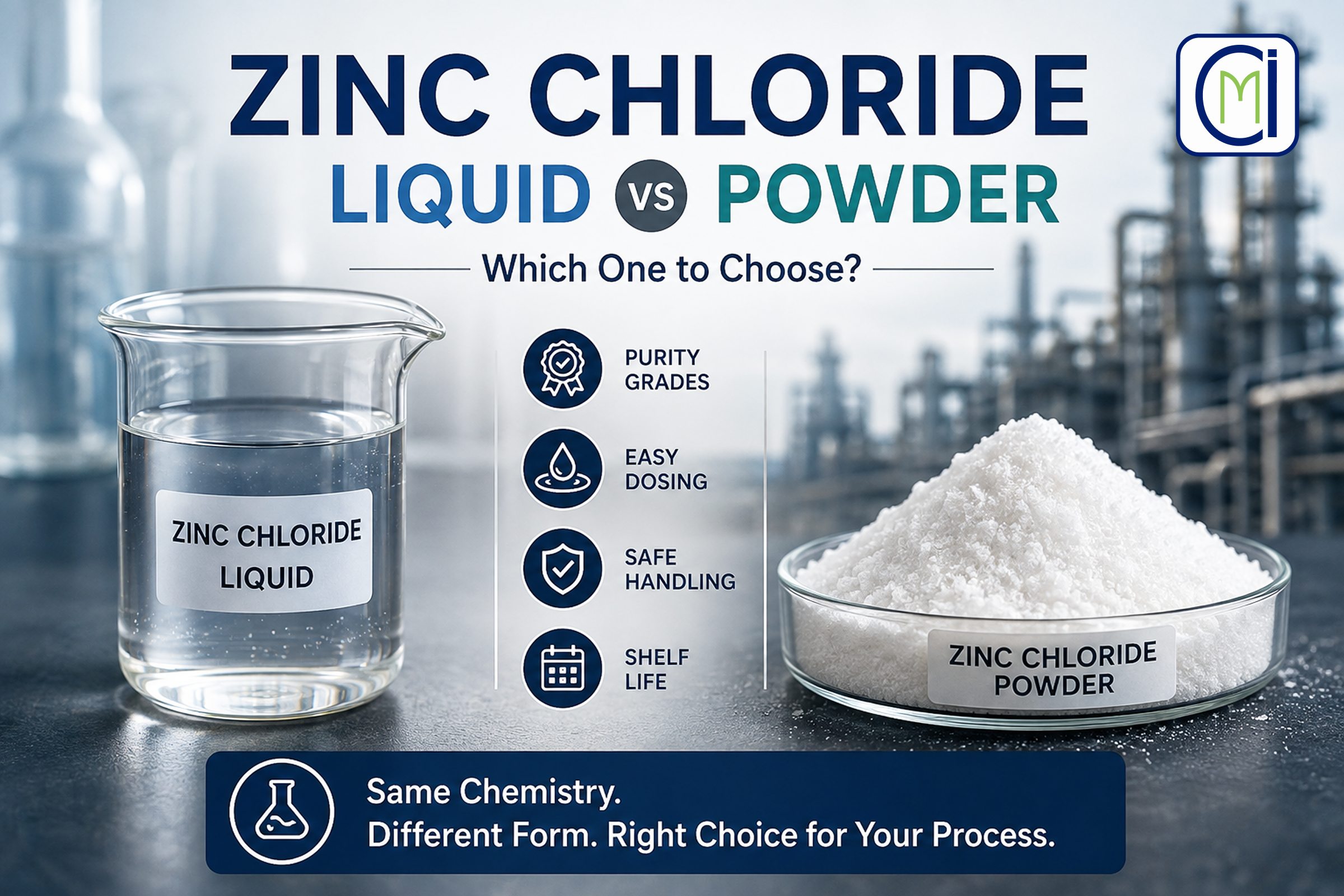
Zinc chloride ships in two commercial forms: a white crystalline powder and a ready-mixed liquid solution. Both are the same compound, ZnCl2, so the choice isn’t about chemistry. It’s about how the product fits into your process: how you store it, how you dose it, and how much handling you want to do before it goes into a tank or bath.
Here’s what actually separates the two forms, and how to pick the right one for galvanizing, water treatment, textile processing, or chemical synthesis.
What's Actually Different Between the Two Forms?
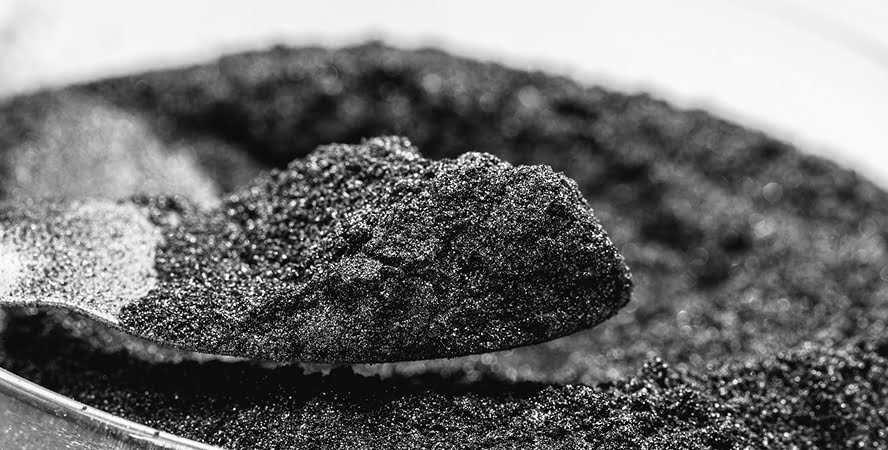
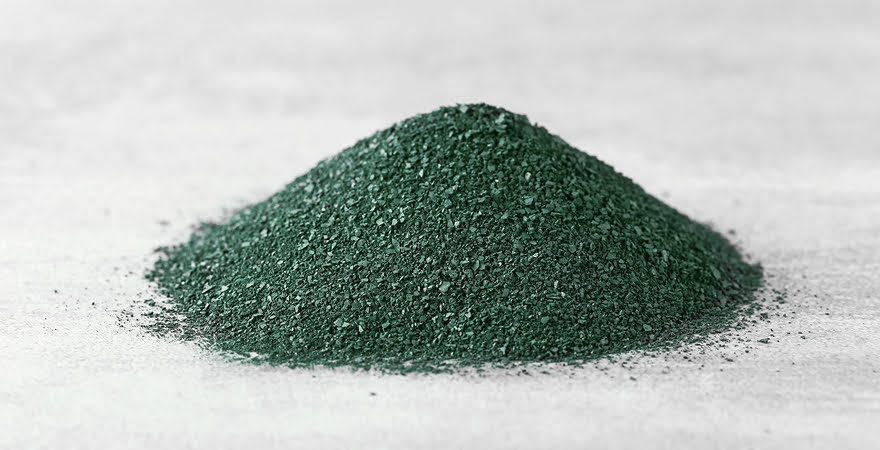
Zinc chloride powder is the solid salt, typically 90 to 99 percent pure depending on grade. To use it in most processes, you dissolve a weighed quantity in water yourself, then check the resulting concentration before dosing.
Zinc chloride liquid skips that step. It’s powder already dissolved in purified water under controlled conditions, shipped at a fixed, verified concentration, commonly 42 to 46 percent ZnCl2 (22 to 24 percent elemental zinc). Specific gravity, checked with a simple hydrometer on arrival, confirms the strength without a lab test.
Neither form is “purer” than the other in a meaningful sense. The powder’s assay reflects the grade you buy; the liquid’s ZnCl2 percentage is that same chemistry, just pre-measured into water.
Zinc Chloride Powder: Best When Grade and Shelf Life Matter
Powder is sold across three purity tiers: Anhydrous (98 to 99 percent), Technical (90 to 92 percent), and Commercial (80 to 85 percent). That range lets you match cost to application instead of paying for high purity in a wood treatment tank that doesn’t need it.
Sealed and kept dry, powder holds its spec longer than liquid, since there’s no water to evaporate or concentration to drift. That makes it the better choice when you’re stockpiling for irregular or seasonal demand, or shipping to a site without bulk liquid storage.
The trade-off is handling. Zinc chloride powder is hygroscopic and deliquescent: it pulls moisture from the air fast, so bags need a moisture-proof liner and a dry warehouse. Every batch has to be dissolved and verified before it can be dosed, which adds a step, and a place for measurement error, that liquid skips entirely.
Zinc Chloride Liquid: Best for Continuous, High-Volume Dosing
Zinc chloride liquid is ready to use straight from the drum or tanker. No dissolving, no dust, no waiting on a batch to go into solution. That makes it the practical choice for continuous galvanizing lines, cooling water treatment systems, and any process where a metering pump doses chemical directly into a bath or tank.
It’s an acidic solution, pH 1 to 5, which is actually useful in galvanizing flux: the acidity itself helps strip residual iron oxide from steel before the zinc coating goes on. The same acidity means it’s corrosive to unprotected metal, so it has to be stored and pumped through HDPE, PP, fiberglass, or rubber-lined equipment, never mild steel.
For high-volume buyers, liquid also simplifies logistics: it moves in bulk by rubber-lined road tanker instead of pallets of bags, which cuts handling labor on sites running large daily volumes.
Not sure which grade or concentration fits your process?
Request specifications and pricing from Meghachem
Quick Decision Guide
Five questions settle most liquid-versus-powder decisions:
- Is your process continuous or batch? Continuous dosing favors liquid; occasional batches favor powder.
- Do you have dust-sensitive equipment or staff nearby? Liquid avoids airborne powder entirely.
- How long will the chemical sit in storage before use? Longer, irregular storage favors sealed powder.
- Does your application need a specific purity grade? Powder’s three-tier grading gives finer control.
- What’s your bulk transport setup? Tanker or IBC access makes liquid more economical at volume; bagged powder needs no special receiving infrastructure.
Storage and Handling: Don't Treat Them the Same
Powder needs a dry, sealed warehouse and HDPE bags with a PP liner. Once a bag is opened, use it promptly. It’s not dangerous to store, just sensitive to humidity.
Liquid needs corrosion-resistant containers. Stainless steel 316L can handle short-term contact, but chloride ions can cause stress corrosion cracking over long-term bulk storage, so HDPE, PP, FRP, or rubber-lined tanks are the standard choice. Keep containers sealed to stop water evaporating and the concentration drifting out of spec.
Both forms are corrosive to skin and eyes and require gloves, goggles, and standard chemical-handling PPE. Full precautions are listed on the Material Safety Data Sheet that ships with every order.
Meghachem manufactures both zinc chloride powder and zinc chloride liquid in-house at its Ahmedabad facility, so switching forms, or ordering both, doesn’t mean switching suppliers.
FAQs
Yes. Both are ZnCl2. Liquid is simply powder pre-dissolved in purified water at a fixed, verified concentration.
Powder, when kept sealed and dry. Liquid is stable in a sealed container but can concentrate or degrade if the container isn’t airtight.
Yes, but you take on the dissolving, dust handling, and concentration-checking yourself. Liquid ships at a verified concentration with a Certificate of Analysis, removing that step.
Powder comes in three grades: Anhydrous (98-99%), Technical (90-92%), and Commercial (80-85%). Liquid ships at a standard 42-46% ZnCl2, with custom concentrations available on request.
Yes. It’s acidic (pH 1-5) and corrosive to unprotected metal. Use HDPE, PP, fiberglass, or rubber-lined containers, not mild steel.